



Blog Single
Marine Cargo & Logistics Insurance
Freight and Logistics Insurance
Single-Shipment · Annual Policy · Freight Forwarder Liability — One-Stop Shipping Risk Protection
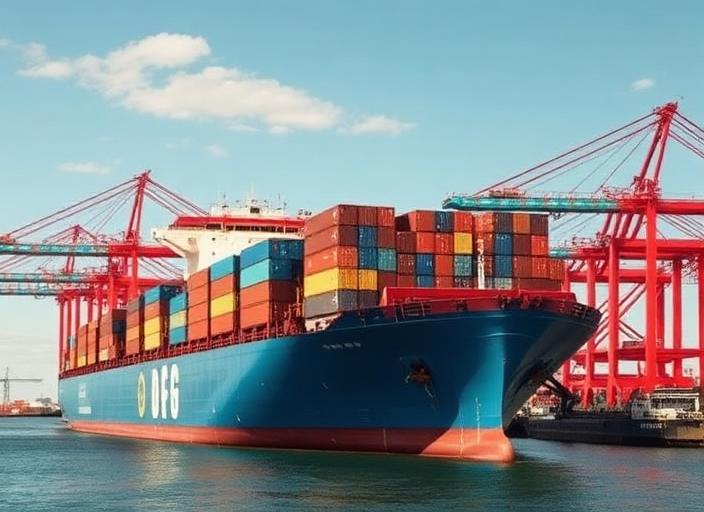
Goods in transit are frequently subject to loss caused by natural disasters or accidents. We partner with multiple insurance companies to provide tailored cargo insurance solutions for the shipping, freight forwarding, and trading sectors—covering sea, air, and land transport as well as inland transshipment—to ensure every shipment arrives safely.
Coverage
Scope of Coverage
Insurance companies develop tailored solutions to meet the needs of the shipping and logistics industries.
Single-shipment cargo insurance
Suitable for occasional shipments; insurance is arranged on a per-shipment basis—offering flexibility and convenience—with coverage taking effect immediately prior to dispatch.
Annual and Short-term Cargo Insurance
Suitable for both domestic and international transport, the annual open policy automatically covers all declared shipments, eliminating the need for per-shipment insurance arrangements.
Freight Forwarder Liability and Cargo Protection
Provides legal liability coverage for logistics providers and freight forwarders, with the option to add coverage for physical loss of or damage to the cargo itself.
Land Transport Insurance
Covers accidental loss of cargo during loading, unloading, and transit for both domestic and cross-border road transport.
Artworks and Valuables
Provide bespoke underwriting arrangements for high-value goods such as artworks, exhibits, jewelry, and precision instruments.
Global Claims Support
An overseas agency network assists with inspections and claims processing, ensuring rapid follow-up even if cargo is damaged at a remote location.
Product Features
Carrier Liability vs. Cargo Insurance
Only by understanding the differences between the two can you select truly adequate coverage for your clients.

Freight Liability
In the absence of cargo insurance, your customer’s shipment is subject to your standard terms and conditions, including applicable limits of liability and exclusions. Should the cargo suffer loss or damage while under your responsibility, compensation will be determined in accordance with those terms. Consequently, your customer may not receive full reimbursement due to liability limits (such as caps per kilogram or per package); furthermore, claims might be rejected based on exclusions (such as acts of God or war). Additionally, your customer would be required to provide evidence establishing your legal liability for the loss incurred.

Cargo Insurance
If cargo insurance has been purchased, your customer will be compensated under the policy. Should the goods suffer physical loss or damage during transit, the payout to your customer can amount to the full value of the goods. Furthermore, as your customer is not required to prove your legal liability for the loss, the claims process is more straightforward and efficient.
Plan Options
Coverage Features
- Comprehensive coverage for sea, air, and land transport, as well as multimodal transport.
- Insurance can be arranged under ICC (A), (B), or (C) clauses.
- War and strike risks may be added to the coverage.
- Freight Forwarder's Liability
- Specialized Services for Artworks, Exhibits, and Valuables
- Support from Overseas Inspection and Claims Agents
- Warehouse-to-Warehouse Clause
- Value of goods + freight + insurance premium = 110% insured value
- Annual Open Policy
- Extension of Land and Cross-Border Transport
- General Average and Salvage Charges
- Instant issuance of Certificate of Insurance (Cert.)
Main Exclusions
Key Exclusions
- Inherent defect, natural loss, or normal leakage of the goods
- Losses resulting from insufficient or improper packaging
- Any loss or decline in market value resulting from the delay
- Bankruptcy or financial default of the shipowner, charterer, or operator
- Willful misconduct or deliberate sabotage
- War, strikes, riots, and acts of terrorism not covered by additional insurance
- Contraband, goods involving illegal transport, or goods in violation of trade sanctions
- Losses caused by nuclear radiation, radioactive contamination, and biological or chemical weapons.
The above is a summary; for details, please refer to the policy terms and conditions of the respective insurance companies.
Claims Guide
Claims Guide
Should any incident occur that could give rise to a claim, please notify our Claims Department immediately; we will assist with the follow-up process throughout.
Instant Notifications
Upon discovering damage to or a shortage of goods, please immediately call our Claims Department and provide the policy number, policyholder's name, and contact telephone number; we will arrange for an inspection right away.
Reservation of Rights and Evidence
You must note the damage on the delivery document upon receipt and submit a written claim notice to the carrier, freight forwarder, or terminal operator within the specified timeframe to preserve your right of recourse; meanwhile, the goods and their packaging must be retained in their original condition pending inspection.
Submit claim documents
Please prepare the original documents—such as invoices, bills of lading, inspection reports, and claim correspondence—for submission to the insurance company; our company will assist in following up on the matter until the claim is settled. Delayed submission may result in the insurance company refusing to process the application.
Documents Required for Claims
- Completed claim application form
- Insurance Policy or Insurance Certificate
- Commercial Invoice & Packing List
- Copy of Bill of Lading / Air Waybill / Waybill
- Survey Report
- Letters of claim issued to the carrier/freight forwarder and their responses
- Proof of delivery or terminal records indicating cargo shortage or damage
- Photos of damaged goods and repair/replacement quotations
Please retain copies of all claim documents for future reference; the originals must be submitted immediately to the insurance company for claims processing.
The Claims Department will contact you immediately.
Please provide the policy number, policyholder’s name, and contact telephone number, and we will immediately initiate the claims process for you.
FAQ
Frequently Asked Questions

How should the insured amount for cargo insurance be determined?
Industry practice is based on 110% of the sum of the commercial invoice value, freight, and insurance premiums; the additional 10% serves to cover the cargo owner’s anticipated profit and miscellaneous expenses.
What are the differences between the ICC (A), (B), and (C) clauses?
ICC (A) is an “all-risks” policy, covering all accidental losses except those specifically excluded; ICC (B) and (C) are “named-perils” policies, with ICC (C) offering the narrowest scope of coverage, primarily covering major incidents such as fire, explosion, sinking, stranding, and collision.
When does the coverage begin and end?
“Warehouse-to-warehouse” clauses are typically applied, covering the period from the moment the goods leave the consignor’s warehouse at the point of origin until they arrive at the consignee’s warehouse at the destination specified in the policy; if the goods are unloaded and stored in transit, a time limit of 30 to 60 days usually applies.
Since the carrier is already liable, is it still necessary to purchase cargo insurance?
Yes, it is necessary. Carrier liability is subject to limits set by conventions such as the Hague-Visby Rules (e.g., calculated per package or per kilogram), and carriers may be exempt from liability in cases such as acts of God; consequently, actual compensation is often far lower than the value of the goods.
Are risks of war and strikes automatically covered?
War and strike risks can typically be added to shipments transported by sea; however, overland transport and certain shipping routes require individual quotations and are subject to regional restrictions and sanctions clauses.
How do annual open policies work?
Once the policy is in place, all shipments made during the policy term are automatically covered; the cargo owner simply needs to declare the cargo value on a monthly or per-shipment basis, with premiums settled according to the actual declared amounts—an ideal solution for trading and logistics enterprises with frequent shipments.
The above information is for general reference only; the actual scope of coverage, indemnity limits, and exclusions are subject to the terms and conditions of the policy.